Perspectives

The future of software is lovable


Coding has flipped from writing to directing. The best engineers now spend more time steering systems than typing lines of code. The interface has moved from IDEs to intent.
Now apply that same lens to the physical world…and turn the dial up.
Full-stack robots should be designed the same way: hardware, data, and software developed together, iterated rapidly, deployed continuously. We’re nowhere near that.
Not because the intelligence piece is missing, but because the hardware manufacturing can’t keep up.
If you compare a world in which robots augment human work wherever it makes economic sense with where we are today, the gap is staggering. The question isn’t if we get there, it’s what’s slowing us down?
The answer isn’t intelligence — it’s manufacturing.
Robotics today feels like early 3D printing in the 1990s; technically viable, proven in labs and niche applications, but constrained by cost, complexity, and production speed. Once machines got cheaper and design software matured, the industry unlocked mass adoption.
Robotics is at a similar inflection point, but the upside is far larger. Software stacks are evolving quickly: simulation, data pipelines, vision-language-action models, retraining loops. The software side is moving fast.
The hardware side is not.
Building a humanoid robot means compressing millions of years of biological optimisation into a machine.
If you want to understand why this is hard, start with the human hand.
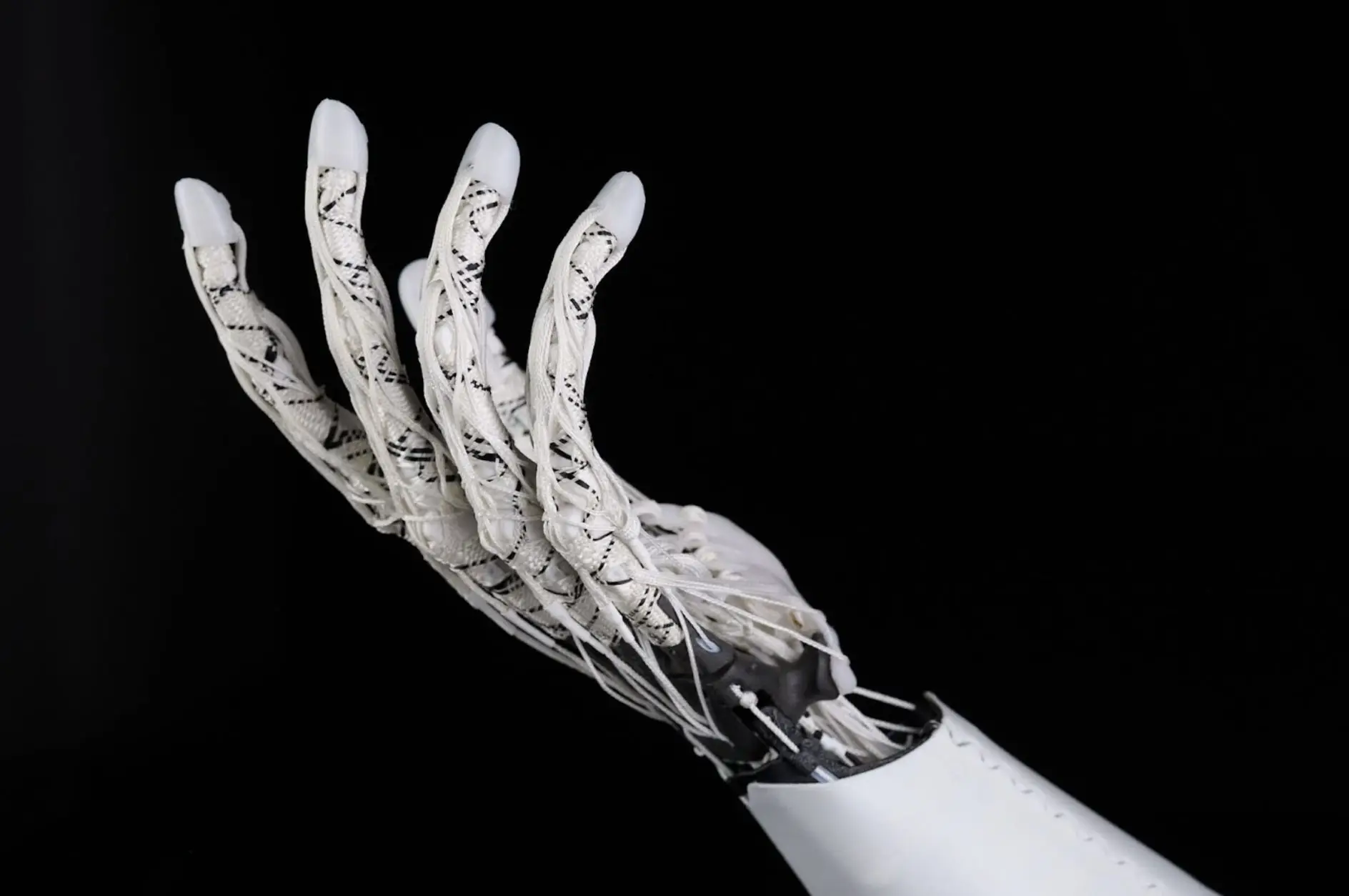
Hands aren’t a “gripper problem”. They’re the general interface to the world: strength and softness, precision and abuse tolerance, high-bandwidth control in an insanely compact form. Human hands have 27 degrees of freedom, powered by tendons pulled from the forearm like a puppet.
That’s why Elon Musk said bluntly about Optimus:
“To create a general humanoid, you must solve the hand problem.”
Robotics has been trying to do this for decades. The result is usually one of two compromises:
Extremely capable hands that cost $25k-$100k+ and take weeks to assemble, or
Cheap hands that are too simplistic and lose what makes hands useful in the first place.
And even when a team builds something impressive, the next bottleneck is manufacturing:
Can you reproduce it thousands of times?
Can you iterate without burning a year of the team’s time?
Can you scale without exploding cost and failure rates?
That’s the wall robotics keeps hitting.
Allonic starts exactly where robotics currently breaks: manufacturing.
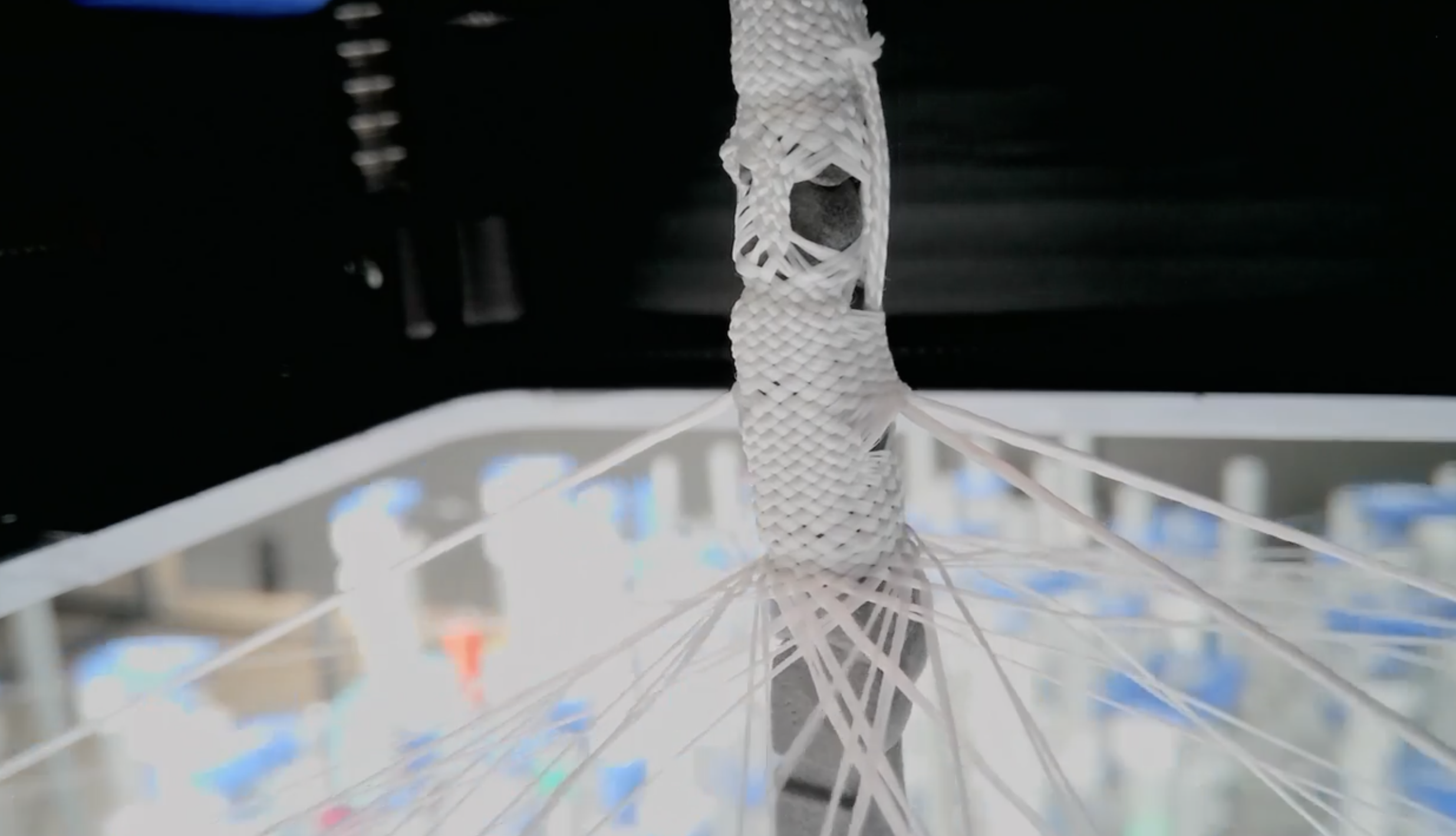
Instead of assembling hundreds of delicate components by (human) hand, Allonic’s 3D tissue braiding technology weaves fine fibres around a skeletal core. Tendons, joints, and load-bearing structures are formed together as a single integrated body.
Inspired by biology and nature, but built like software.
Its platform takes high-level digital designs and translates them directly into production code. Similar to how 3D printing turns models into toolpaths.
Mechanisms that once took days or weeks of skilled assembly can now be produced in under an hour, with orders of magnitude fewer components and a fraction of the cost.
The collapse in iteration cost is the gamechanger. And Allonic is pushing this further by integrating multiple materials on its platform and embedding wiring and sensing during production. This eliminates late-stage integration debt that kills reliability when teams try to scale.
So this isn’t about creating a better ‘gripper’. It’s actually about a new manufacturing layer for tendon-driven robotics.
To capture an explosive market opportunity with this timing, you need a truly product-obsessed team with very strong opinions and unusual agency.
Benedek Tasi, Allonic’s Co-Founder & CEO, has been obsessed with prosthetics since his teenage years. He pursued that obsession through robotics, and when academic research proved too slow and incremental, he decided to build instead.
During the pandemic, with no capital and limited resources, he and his co-founders prototyped the first braiding machine themselves. They put up posters at their university in Budapest asking robotics students to help assemble it for free.
That sounds insane, until you realise it’s a perfect filter. The people who showed up became the backbone of Allonic’s early engineering team.
Robotics adoption will accelerate once dexterity and autonomy cross a threshold where deployment stops being exceptional and becomes normal. When that happens, demand will scale fast because the economic pull is obvious.
Allonic is building ahead of that curve and is laser-focused on execution. If it succeeds, the outcome isn’t about a niche end-effector business, but about becoming the default manufacturing platform for dexterous robotic bodies as the ecosystem scales.
We at Visionaries believe the next robotics breakthroughs won’t come from incremental improvements, but from teams willing to rethink first principles.
Allonic is doing exactly that at the manufacturing layer: the hardest and most underinvested part of the stack.
This is what hungry beats big looks like in robotics, and it’s why we’re so excited to be partnering with Benedek and his team.




Visionaries
Taktile
Judith Dada
Venkat Kondragunta
Judith Dada
Visionaries
Visionaries
Visionaries