Perspectives

The future of software is lovable


Yes, European venture capital has shown resilience. Investment hit its highest level since late 2023; the STOXX Europe 600 rose even as the S&P 500 slipped; and a handful of breakout founders – from Anton Osika and Jan Oberhauser to Robin Rombach – have put Europe back on the global map. Yet the bigger picture remains sobering. Liquidity in the US is constrained as endowments and foundations rebalance, and Trump has hiked up the price of H-1B visas for technical talent.
Deal volume across Europe fell even as total capital rose, showing a market concentrating around fewer, larger rounds. Some call that maturity; others might call it caution. The real story is that conviction is returning, but scarcity remains. Capital is flowing to those who can prove technical defensibility, capital efficiency and speed – not just vision.
Meanwhile, macro tailwinds are mixed. The euro strengthened, exits picked up, and the inflow of US talent into European AI and deeptech ecosystems continued. But these are fragile advantages. Beneath them lie Europe’s structural headwinds: slow energy scaling, political fragmentation and demographic decline.
AI remains the centre of gravity in venture. Most European deal value comes from AI-related startups and yet we’re still lagging behind. In the first half of the year, the US captured 97% of global GenAI deal value.
Still, the ambition is growing. Founders across the continent are building faster and thinking bigger. Some of our portfolio offers glimpses of what’s possible: Lovable reached $100m ARR in just eight months – a European outlier on global terms. CoreWeave’s $20bn IPO and OpenAI’s $3bn acquisition of Windsurf underscored how much value sits in owning compute and infrastructure.
Globally, the AI race is accelerating. xAI launched Grok4, Google launched Quantum Echoes, Meta announced plans for “superintelligence” and committed hundreds of billions to data centres alongside Nvidia – while enterprise adoption is finally crossing the chasm. Klarna rebuilt its entire software stack using internal AI tools; Shopify’s Tobi Lütke mandated AI adoption company-wide.
This shift is redefining what “company-building” means. Speed now trumps scale; headcount is no longer the proxy for ambition. Founders who can build with AI, not just for AI, are setting the pace.
At Visionaries, we’ve leaned hard into this reality. Our focus on AI-native SaaS – from vertical models like Tandem, leveraging proprietary healthcare data, to horizontal orchestrators like n8n – reflects a simple belief: the next decade belongs to founders who move from AI-enabled to AI-built. Choco’s relaunch as an AI-first company, deploying autonomous agents across operations, is one sign of that evolution.
Defence has become the other defining theme of 2025. More than €1 trillion in budgets have been committed across NATO states, with Germany pledging €800bn and the UK targeting over £100bn annually.
Modern warfare has already changed. Drones and autonomous systems have replaced manned aircraft. Ukraine remains the live testbed – and the warning shot – that has forced Europe to confront its own vulnerabilities. As the US signals uncertainty about its future role in NATO, Europe’s need for sovereignty has become existential.
Venture capital has followed suit. Interest in aerospace and defence startups has surged, with emphasis on secure supply chains, dual-use innovation and sovereign manufacturing. Yet this space demands more than capital. It requires judgement, responsibility and moral clarity.
Our view at Visionaries is simple: Europe must rebuild its industrial and defence capacity, and take advantage of the latest technological advances to do so, but it must do so with integrity. It’s about backing the founders building technologies that make democracies safer and societies stronger

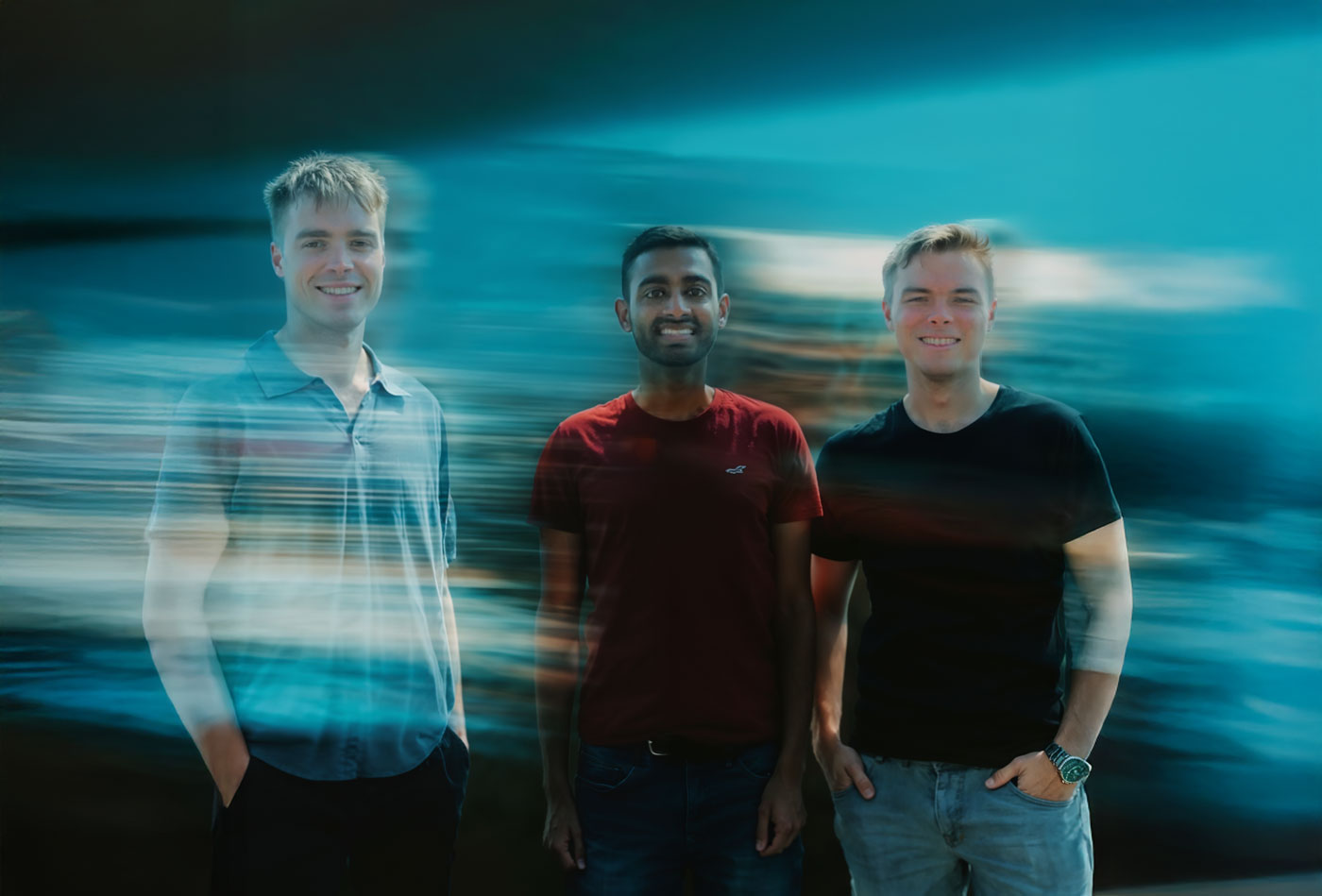
2025 also marked an inflection point for Visionaries itself. Judith Dada joined as General Partner, reuniting with Robert Lacher to co-lead our B2B funds, while Sebastian continued to build Visionaries Tomorrow, our industrial deeptech fund. Together, this means doubling down on our mission: to be the partner-of-choice for the world’s hungriest entrepreneurs. Because we believe: hungry beats big.
We’re under no illusion that Europe’s problems are solved. Energy costs remain double those of the US and China. Our data-centre capacity lags far behind. The continent’s working-age population is shrinking, and populist politics threaten to erode the very openness that drives innovation.
Still, we are bullish on Europe and the extraordinary founders who are building here. Real optimism starts with realism and action. We are still in kilometre one of the ‘AI race’ and it’s all to play for in major categories, from foundational models to application layer AI tools.
That’s why we continue to invest early, support founders deeply, and convene our community – from Visionaries Unplugged in Paris to our GTM day in London and Industrial AI day in Munich – to push each other beyond the comfort of commentary. Europe doesn’t need cheerleaders; it needs builders.
Our role is to be in their corner with them – matching their hunger, conviction, and courage.





Visionaries
Taktile
Judith Dada
Venkat Kondragunta
Judith Dada
Visionaries
Visionaries
Visionaries